In the sterile, sound-proofed darkness of a Leningrad dubbing studio, a drama of profound metaphysical weight unfolds. A film is nearing completion, but its star, the actress Yulia Martyanova (Natalya Sayko), is dying. Her body, weakened by a terminal illness, can no longer appear on set, but her voice—the essential, final component of her performance—is still needed. Shuttling between the grim reality of a hospital ward and the artificial environment of the studio, Yulia must complete her role, lending her voice to her healthy, on-screen image. Ilya Averbakh’s The Voice (Golos, 1982) is far more than a melodrama about the film industry; it is a spare, agonizing, and deeply philosophical examination of the dialectic between creation and annihilation, the mortal body and the immortal artifact.
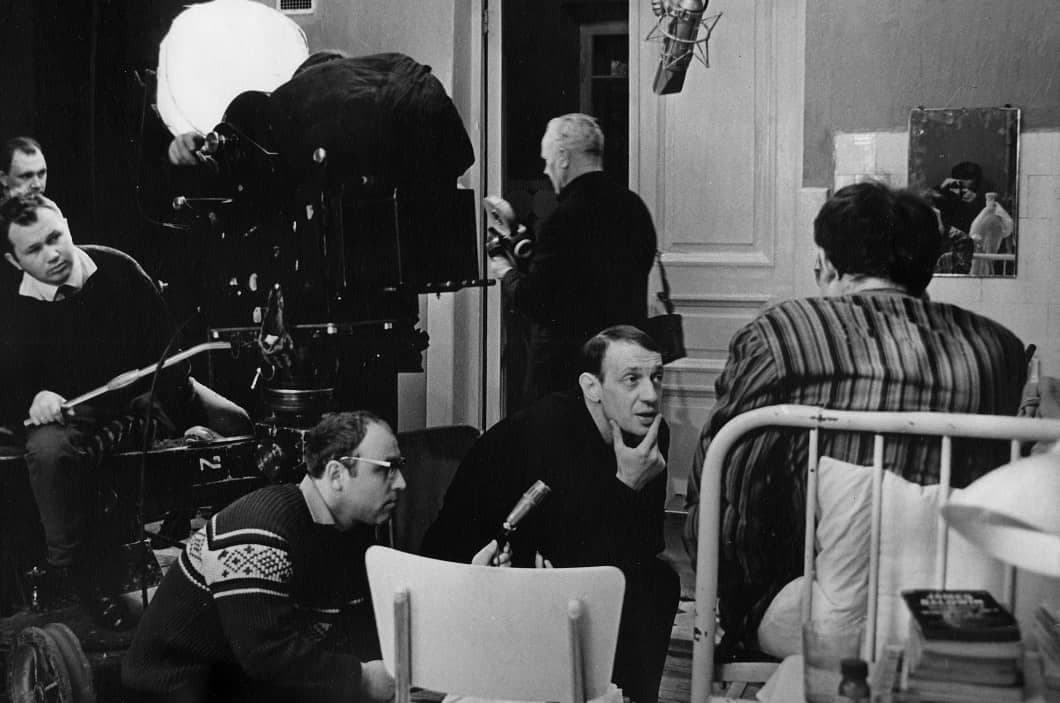
The film operates within a stark, dualistic geography. On one side, there is the hospital: a world of clinical white, hushed corridors, and the quiet, administrative process of dying. On the other, the dubbing studio: a dark, womb-like space, where technology serves to isolate and capture the most ethereal part of a human being—their voice. Averbakh frames this space not as a place of creative energy, but as a kind of surgical theater. The microphone, looming in close-up, is not a tool but an instrument of extraction. It is there to record the soul, even as the body that houses it fails. The film crew, led by the patient but pragmatic director (Leonid Filatov), becomes a complex collective of witnesses, collaborators, and, in a sense, vultures. Their professional necessity—"we need the voice"—is a constant, uncomfortable friction against the human tragedy unfolding before them. Their empathy is real, but it is secondary to the inexorable demands of the production. The film must be finished.
This central tension elevates The Voice beyond a simple "film about filmmaking." It becomes a haunting inquiry into the nature of performance and legacy. Yulia’s act of dubbing is a process of disembodiment. She watches her own healthy, vibrant image on screen—a ghost of a self that no longer exists—and must imbue it with the life that is actively draining from her. Her physical pain, her shortness of breath, her weariness are all obstacles to be overcome in the service of a seamless illusion. The performance becomes a heroic, almost spiritual, act of will. The voice, in this context, is no longer just a component of acting; it is the last flicker of consciousness, the soul struggling to be heard before it is extinguished. Averbakh suggests that art is not a gentle act of creation, but a violent, sacrificial one, demanding a pound of flesh—or in this case, the final breaths—from its creator.
The film-within-the-film, a historical drama about a revolutionary heroine, serves as a crucial meta-narrative layer. Yulia is playing a character who is also facing immense personal and historical pressure, a woman whose ideals are tested to their breaking point. This doubling creates a profound resonance. Yulia’s real-life struggle with mortality infuses her fictional character with an almost unbearable authenticity. The lines she speaks are not just dialogue; they are fragments of her own last testament. When she struggles to deliver a line with the required strength, the boundary between the actress and the character dissolves completely. We are watching not a performance of suffering, but suffering in the act of performance. This is the film’s quiet horror and its devastating power: the recognition that the art being created is consuming its creator in real time.
Averbakh, a key figure of the introspective Leningrad school of cinema, eschews overt sentimentality. His direction is precise, observational, and deeply humane. The film’s atmosphere is thick with a Chekhovian sense of quiet despair and resilience. There are no grand speeches or dramatic breakdowns. The tragedy is communicated in the small details: the way Yulia closes her eyes in exhaustion between takes, the forced cheerfulness of her husband, the averted glances of the sound engineer. This quietude forces the viewer to contemplate the ethical questions at the film's core. What is the human cost of a perfect take? Does the permanence of a finished film justify the suffering required to create it? The film offers no easy answers, presenting the crew’s dilemma not as monstrous, but as a deeply human conflict between compassion and professional duty.
In its final moments, The Voice achieves a chilling transcendence. The film is finished. Yulia is gone. What remains is the product: a complete, polished work of art that will be seen by audiences, reviewed by critics, and archived for posterity. Her voice, now permanently fused with her celluloid image, has achieved a form of immortality. It will echo in cinemas long after the body that produced it has turned to dust. This is the artist’s paradox and the film's haunting conclusion. The voice has been saved, but the person has been lost. The finished film is both a monument to her talent and a tombstone marking her sacrifice. Averbakh's final masterpiece is a quiet, profound elegy for the artist, leaving us with the eternal, disembodied echo of a voice that paid the ultimate price for its own preservation.