There is no story in Hélène Cattet and Bruno Forzani’s Let the Corpses Tan, at least not in any conventional sense. There is a scenario, a skeletal framework borrowed from the pulp fiction of Jean-Patrick Manchette: a remote seaside ruin, a gang of thieves, a cache of stolen gold, and an inevitable, bloody standoff under a punishing sun. But to approach this film seeking narrative coherence or psychological depth is to fundamentally misunderstand its purpose. This is not a story; it is a ritual. It is a work of radical cinematic formalism that strips the Giallo and the Spaghetti Western of their narrative pretensions, boiling them down to their aesthetic essence: leather, sweat, steel, gold, and blood.
From their previous work (Amer, The Strange Colour of Your Body’s Tears), Cattet and Forzani have established themselves as masters of a unique cinematic language—a language of pure sensation. Here, they perfect it. The camera is not a passive observer but a fetishistic entity, obsessed with texture and surface. It lingers on the cracks in a leather glove, the glint of light off a pair of sunglasses, the beads of sweat on sunburnt skin, the shimmering weight of gold bars. The human body is granted no special status; it is merely another texture in the landscape, as elemental as the stone of the ruins or the churning sea. When violence erupts, it is not a dramatic event but an aesthetic one—a punctuation of crimson against a canvas of bleached yellow and deep, stylized black.
This deliberate evacuation of psychology is the film's most defining feature. The characters are archetypes, not people. They are defined by their accessories and their silhouettes: the enigmatic artist Luce with her paintbrush, the gang leader with his whip, the leather-clad bikers and the pursuing cops. We learn nothing of their pasts or motivations because they are irrelevant. They are pawns in a meticulously choreographed ballet of violence, their faces often obscured or framed in extreme close-up, reducing them to a pair of eyes, a trigger finger, a gasping mouth. This is the "mask without a hero" described by the source novel’s co-author, Jean-Pierre Bastid. The film offers no one to root for, denying us the comfort of emotional investment and forcing us instead to confront the pure mechanics of the spectacle.
Sound and image are given equal, overwhelming importance. The sound design is a hyper-real symphony of amplified details: the deafening crack of a rifle, the wet thud of a body hitting the ground, the maddening buzz of a fly, the metallic click of a gun being cocked. The score, a treasure trove of obscure Morricone-esque library music, doesn't supplement the action; it dictates it. The film feels edited to the rhythm of its soundtrack, creating a relentless, operatic sensory assault that is both exhilarating and exhausting. Visually, the directors employ a saturated, high-contrast palette that pushes the 16mm film stock to its limits. Days are a blinding, golden inferno; nights are a stark abyss of black and blue. The passage of time becomes fluid and unreliable, fractured by non-linear editing, jarring cuts, and repeated motifs, trapping the viewer in a delirious, sun-stroked fever dream.
In this abstract space, familiar genre tropes are deconstructed and reassembled into something new. The standoff of a Western is present, but it’s stripped of honour and tension, becoming a chaotic, almost abstract pattern of bodies and bullets. The voyeuristic gaze of the Giallo is there, but it’s turned upon everything—a gun is sexualized as much as a body, a bullet’s trajectory is as eroticized as a caress. By refusing to prioritize human drama, Cattet and Forzani expose the violent, fetishistic heart that has always beaten beneath the surface of these genres. They are not telling a story using a style; the style is the story.
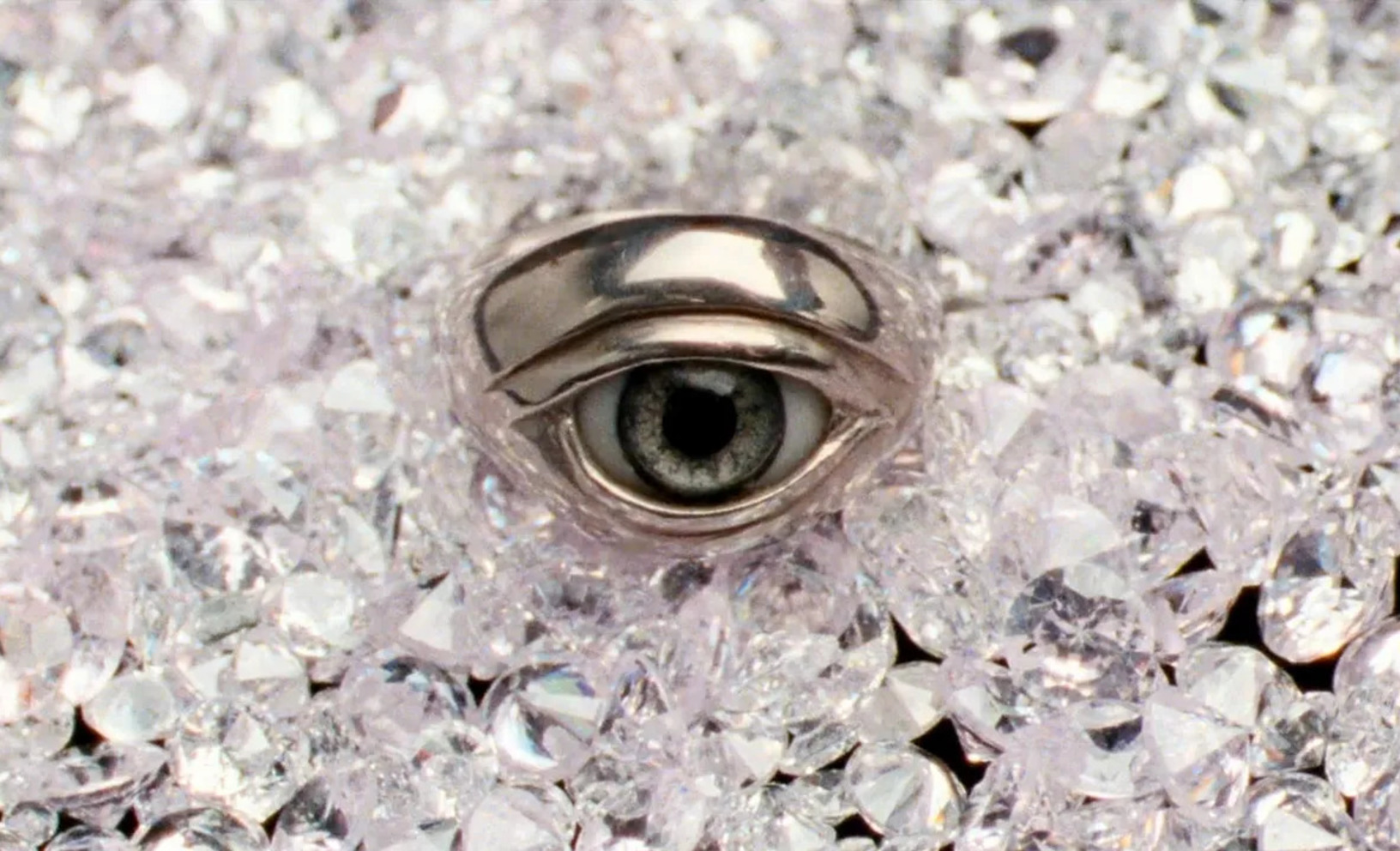
Let the Corpses Tan is a challenging, even alienating, piece of cinema. It is a work of art that demands submission. It asks the viewer to abandon the search for meaning and instead surrender to the overwhelming, hypnotic rhythm of its surfaces. It is a testament to a cinema of pure sensation, a film that doesn't want to be understood, but felt. The "reflection in a dead diamond" of the Russian title is the perfect metaphor: it is a dazzling, beautiful, and utterly cold surface, reflecting nothing but its own brilliant, empty form.