To experience Leos Carax’s Holy Motors is to submit to a state of profound and thrilling ontological vertigo. The film presents us with a man, Monsieur Oscar (Denis Lavant), who travels through Paris in the back of a white stretch limousine, a mobile dressing room where he transforms himself for a series of “appointments.” He is, by turns, a stooped beggar, a motion-capture artist in a skin-tight suit, a monstrous sewer-dweller named Merdé, a concerned father, a hitman, a dying patriarch. Each performance is total, each identity shed as easily as a costume. But the film withholds the crucial context we crave: Who is the client? What is the purpose of these elaborate charades? Is there a real Oscar beneath the greasepaint and prosthetics? By refusing to answer, Carax crafts not a narrative, but a hypnotic, feature-length philosophical inquiry into the nature of performance, identity, and the very soul of cinema in the 21st century.
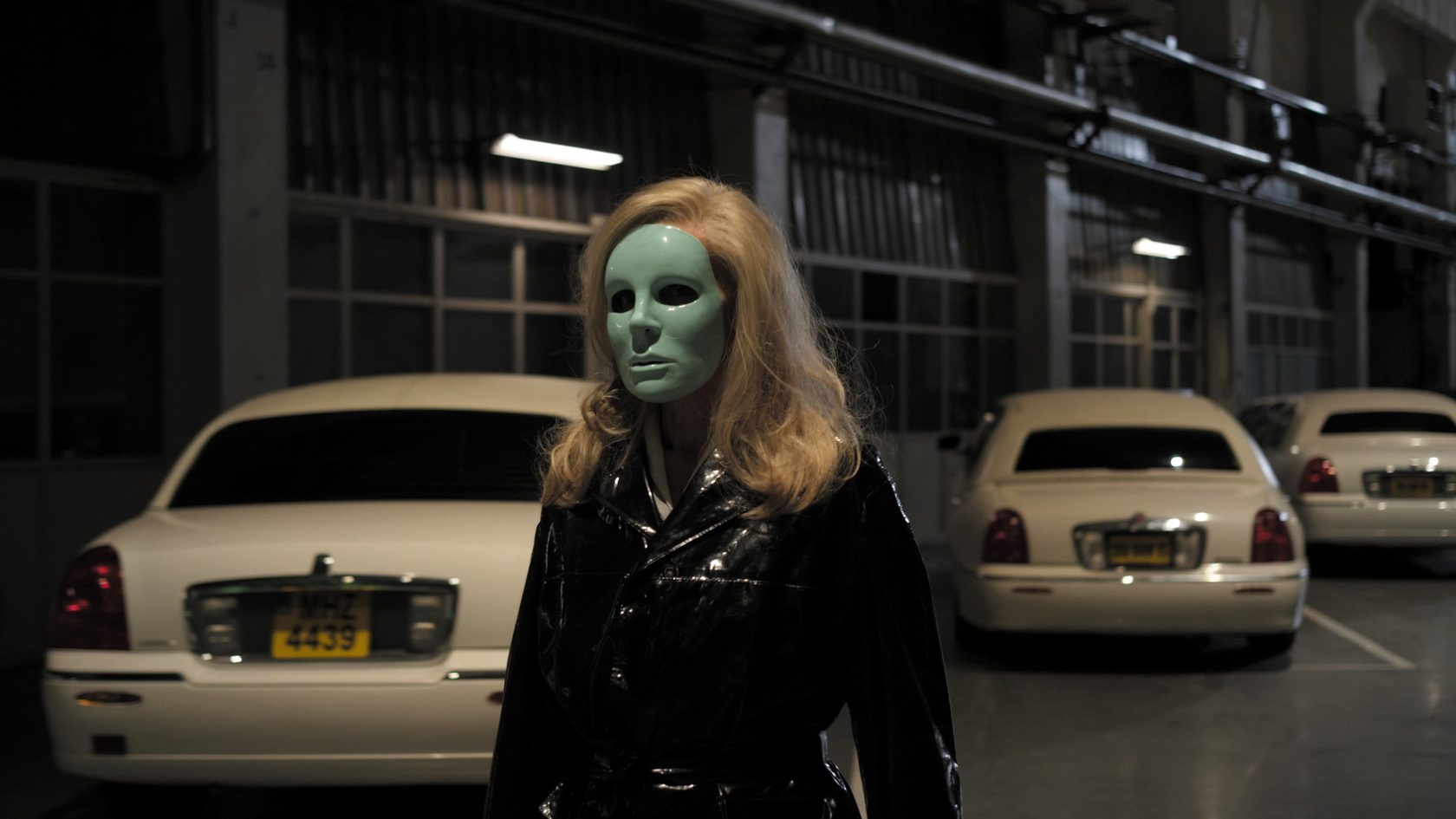
The limousine, driven by the stoic Céline (Édith Scob), is the film’s central metaphor: it is a chrysalis, a backstage, a confessional, and a coffin. It is the engine of transformation, a hermetically sealed space where the messy work of creation happens. Inside, Oscar is an actor preparing for a role; outside, he is the role itself. This duality mirrors the process of filmmaking, where the chaotic, technical reality of the set is concealed to produce the seamless illusion on screen. But in Holy Motors, the machinery is laid bare. The limousine is both the technology of illusion and a character in its own right, a weary workhorse carrying the weight of its strange cargo. It is the last remnant of a tangible, mechanical cinema in an age where, as one character notes, cameras have become so small they are no longer visible. The film mourns the loss of this visible apparatus, suggesting that when the machine disappears, something essential about the performance—its connection to a physical reality—is lost with it.
At the core of this mechanical heart is the human body, specifically the astonishingly malleable form of Denis Lavant. Oscar’s body is a vessel, a medium pushed to the breaking point for the sake of his art. It is aged, contorted, wounded, and made beautiful. The film is a testament to the haptic, sacrificial reality of the performer. In the film’s most haunting and beautiful sequence, Oscar, clad in a motion-capture suit, performs a sensual duet with a female counterpart. Their bodies, covered in glowing nodes, become pure data, their movements translated into sleek, serpentine avatars on a screen. Here, Carax confronts the digital dematerialization of the actor. The performance is sublime, but it is also sterile, a ghost of a physical act. The film seems to ask if this is the future of cinema: a world of weightless images, divorced from the sweat, pain, and gravity of the human body that once gave them life.
The driving force behind Oscar’s endless labour remains deliberately obscure. "I do it for the beauty of the act," he claims, a line that serves as the film’s defiant manifesto. But who is this beauty for? The film opens with a shot of a dormant cinema audience, suggesting the spectator is asleep, absent, or indifferent. The appointments seem to serve no narrative purpose and have no discernible audience within the film's world. This posits a terrifying condition: that of a performance without a witness. Oscar is an actor in search of a camera, a ghost haunting a world that may have stopped believing in him. His labour becomes a ritual, a compulsive act of creation performed not for applause or commerce, but as a spiritual necessity. It is a hymn to the artist who continues to create in a void, driven by a faith in the intrinsic value of the gesture itself, regardless of whether anyone is watching.
This deep, melancholic ache for a bygone era pervades the film, culminating in its final, surreal scenes. The brief, heartbreaking reunion between Oscar and a past lover (played by Kylie Minogue) in the abandoned La Samaritaine department store feels like a ghost story within a ghost story—a flicker of genuine emotion in a life of artifice, yet it too is just another appointment. The film’s true, devastating finale, however, belongs to the machines. After parking for the night, the limousines in the “Holy Motors” garage begin to speak to one another. They complain about their exhaustion, their obsolescence, their fear of being sent to the scrapheap. They lament a world that no longer needs them. In this moment, Carax’s elegy becomes explicit. The film is a requiem for a certain kind of cinema—the cinema of tangible film stock, visible cameras, and grand, physical gestures.
Holy Motors offers no easy conclusions. It is a dream-like procession of images and ideas that lingers long after the credits roll. It is a love letter to the history of film, a portrait of the artist as a weary shapeshifter, and a profound meditation on what it means to be human in an age where the line between the authentic self and the performed identity has all but dissolved. In the end, Oscar, and Carax with him, can only offer the act itself as an answer—a beautiful, desperate, and holy gesture against the encroaching darkness.